Skip to content
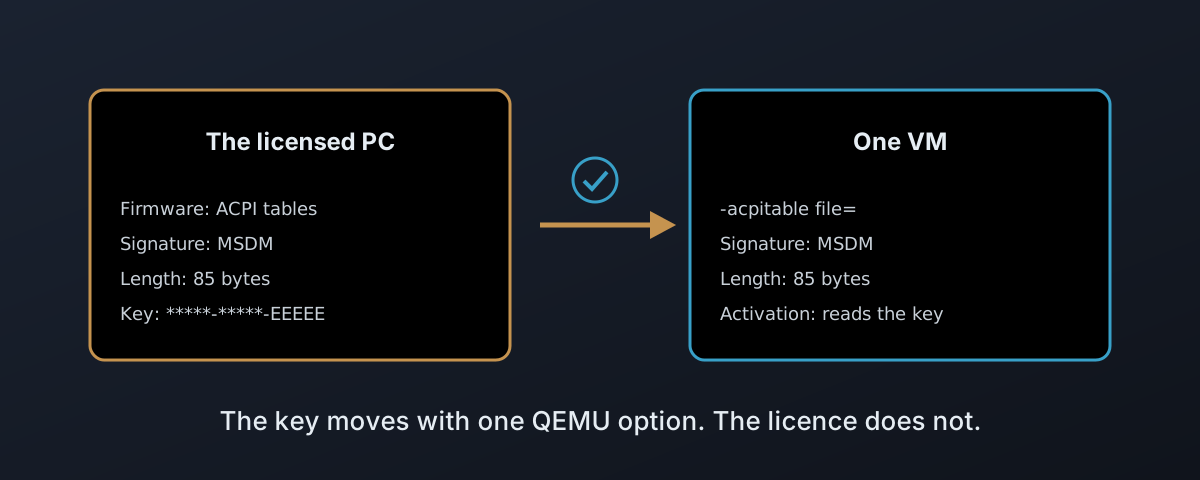
A licence key moving from a PC's firmware into a single virtual machine

Moving an OEM Licence Into a Proxmox VM, and What Moves With It

An OEM licence for the Fisher-Price OS (Windows) lives in the PC’s firmware as an ACPI table called MSDM, and QEMU will pass any such table to a guest without checking it. This covers what the table holds, a validator that refuses malformed tables before QEMU silently repairs their headers, storing them in the private half of the Proxmox cluster filesystem, Microsoft’s terms on moving an OEM licence, the one case they plainly allow, taking the table straight from the host when the licensed machine is the hypervisor, and why MAK, KMS, Active Directory and AVMA activation never touch the table.
4th October 2026 Â· 11 min Â· 2595 words Â· Damien Dye
A virtual machine's boot screen with the hypervisor's logo replaced by a product's own

Branding a Proxmox VM, and Keeping It Branded Through the Next Upgrade

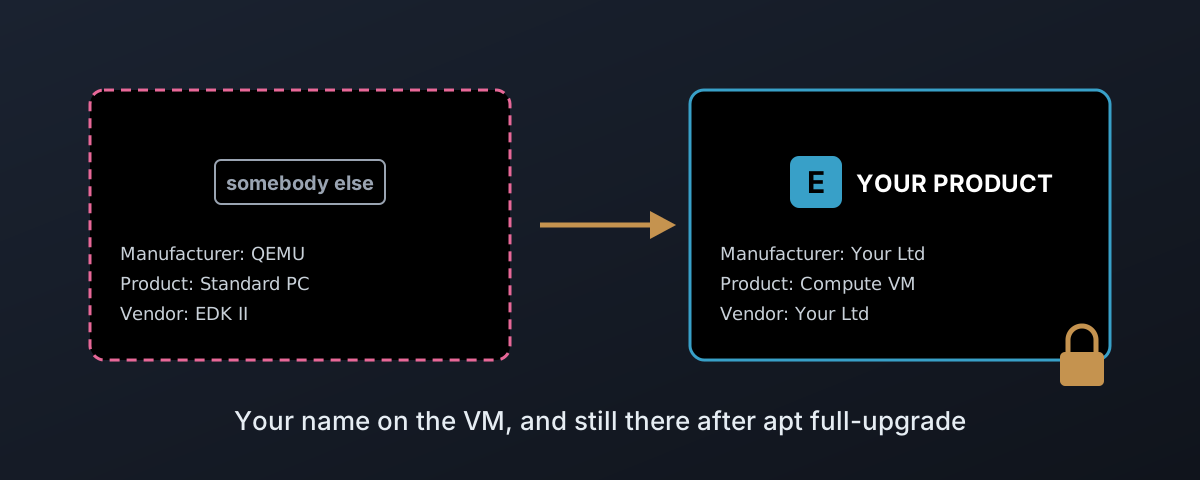
A stock Proxmox VM shows Proxmox’s logo at boot, says Proxmox in its firmware vendor string and calls itself QEMU in every SMBIOS table. This replaces all of it with your product’s name: SMBIOS types 0, 1, 2, 3 and 11 with the serial number and SKU filled from the VM’s own name and size, the SeaBIOS splash and its colour trap, a branded OVMF built from Proxmox’s own tree or an option ROM driver that replaces the logo and the BGRT under Secure Boot without touching the firmware, and the web interface logo. Every change is placed so an upgrade cannot quietly undo it, and the one an upgrade can leave dangerously stale, the firmware, gets a hook that says so.

4th October 2026 Â· 24 min Â· 5661 words Â· Damien Dye
One KVM kernel module beneath five different management stacks

Proxmox VE Is Not a Hypervisor — KVM Is, and You Are Already Running It

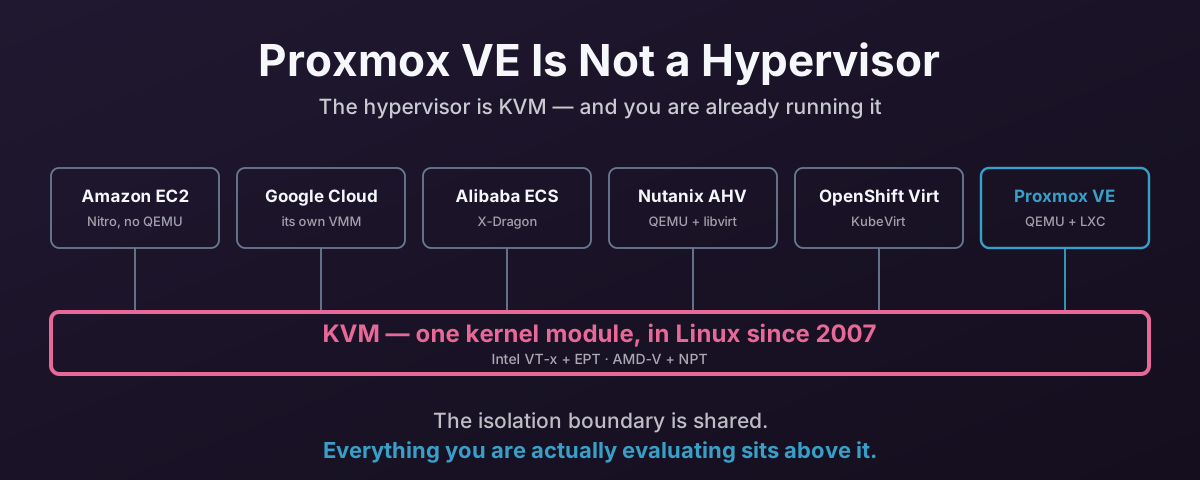
“Is Proxmox enterprise grade?” is a question about the hypervisor, and Proxmox VE does not contain one. The hypervisor is KVM — the same kernel module underneath EC2, Google Cloud, Alibaba Cloud, Nutanix AHV and OpenShift Virtualisation. What Proxmox really maintains, why the type 1 argument is aimed at the wrong line, and what the shared foundation does not buy you.

12th August 2026 Â· 26 min Â· 5483 words Â· Damien Dye
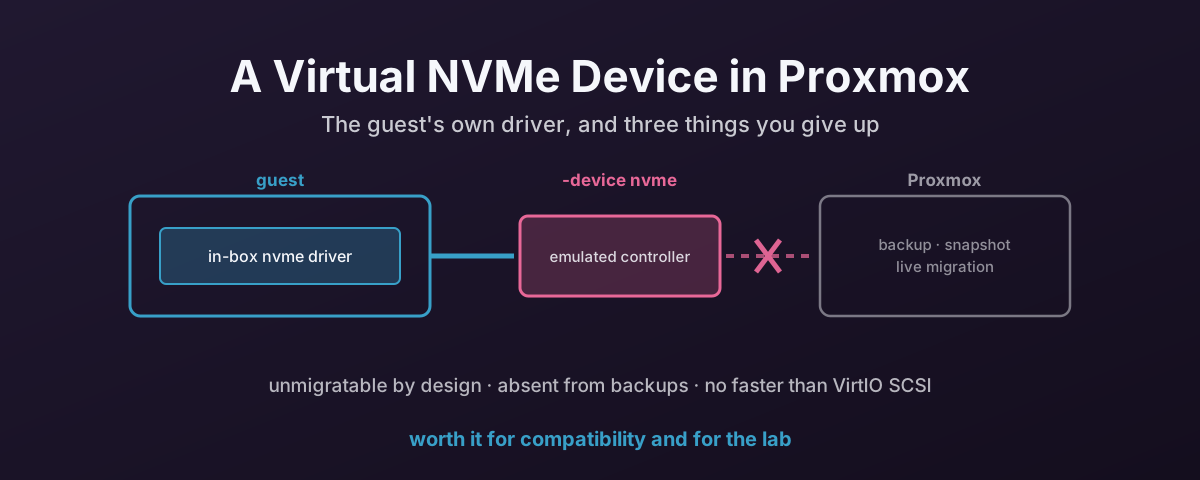
An emulated NVMe controller beside a VirtIO SCSI path, with Proxmox unable to see the former

A Virtual NVMe Device in Proxmox — and the Three Things You Give Up

QEMU can emulate a real NVMe controller, so the guest uses its own in-box NVMe driver with no VirtIO media required. It is also unmigratable by design, invisible to Proxmox backups, and no faster than VirtIO SCSI. Here is how to add one and when it is worth it.

7th August 2026 Â· 10 min Â· 2025 words Â· Damien Dye
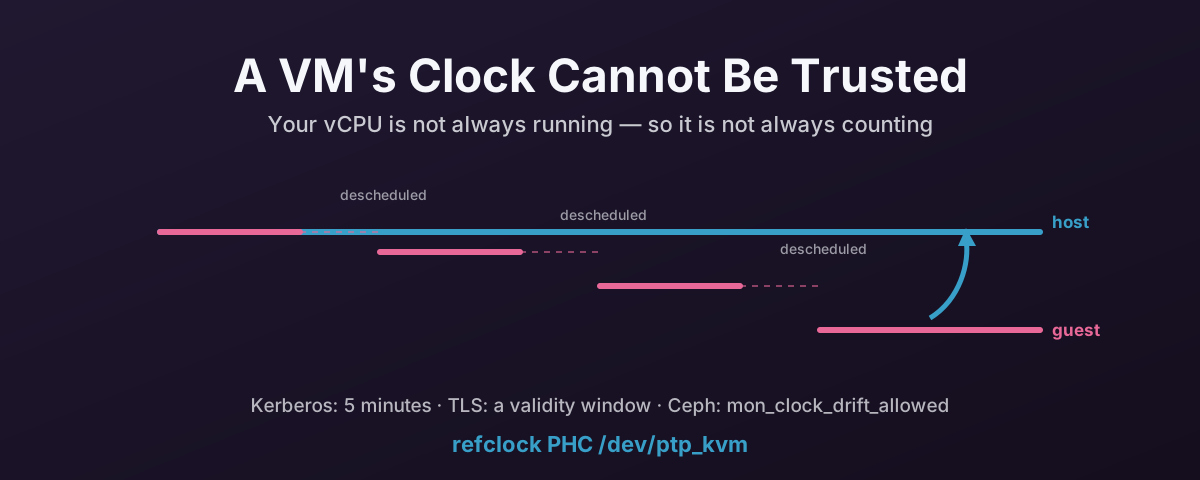
A guest clock drifting away from the host clock, and a hypercall pulling it back

A VM's Clock Cannot Be Trusted — and the ptp_kvm Fix for QEMU/KVM

A virtual machine’s clock is built on an assumption virtualisation breaks: that the CPU keeps counting. Why guest time drifts on every hypervisor, what the skew actually breaks — Kerberos, TLS, Ceph, Windows — and how ptp_kvm fixes it properly on QEMU/KVM.

7th August 2026 Â· 14 min Â· 2897 words Â· Damien Dye
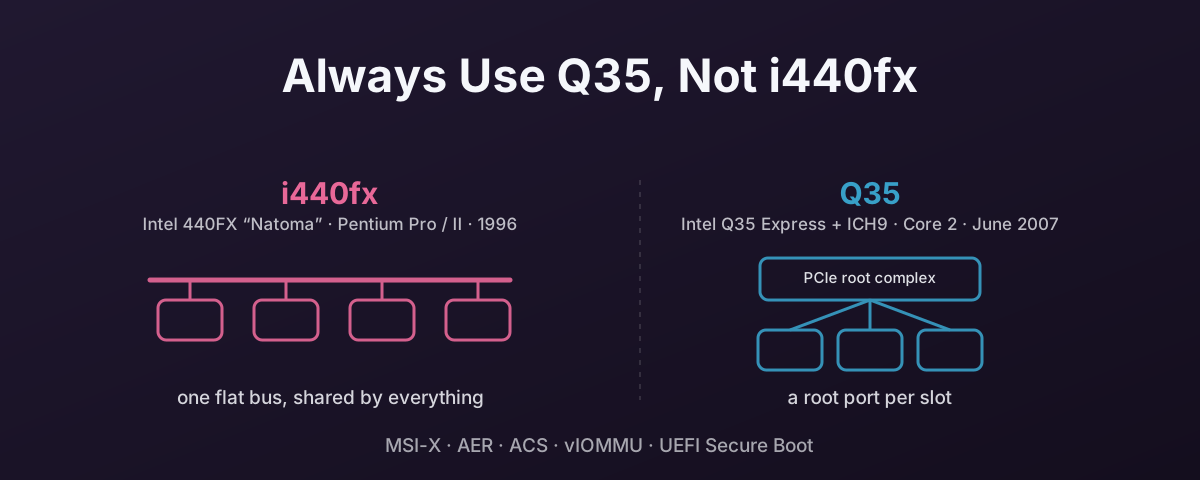
A flat 1996-era PCI bus beside a 2007-era PCIe root complex

Always Use Q35, Not i440fx — Why It Matters on Proxmox VE

The two QEMU virtual chipsets are not interchangeable. Q35 provides a proper PCIe topology that passthrough, modern Windows, and the wider KVM ecosystem all depend on.

7th August 2026 Â· 11 min Â· 2245 words Â· Damien Dye