Skip to content

Who Actually Writes & Uses Ceph

I counted every commit to Ceph’s main branch for the last ten years — 69,613 of them from 1,718 people across 478 organisations — traced all 38 Steering Committee members to their employers, and gathered the publicly stated deployments. The result is a project that absorbed the loss of its founder and its second-largest contributor without dropping a beat, and is still shipping at the same rate today.
27th August 2026 Â· 36 min Â· 7504 words Â· Damien Dye
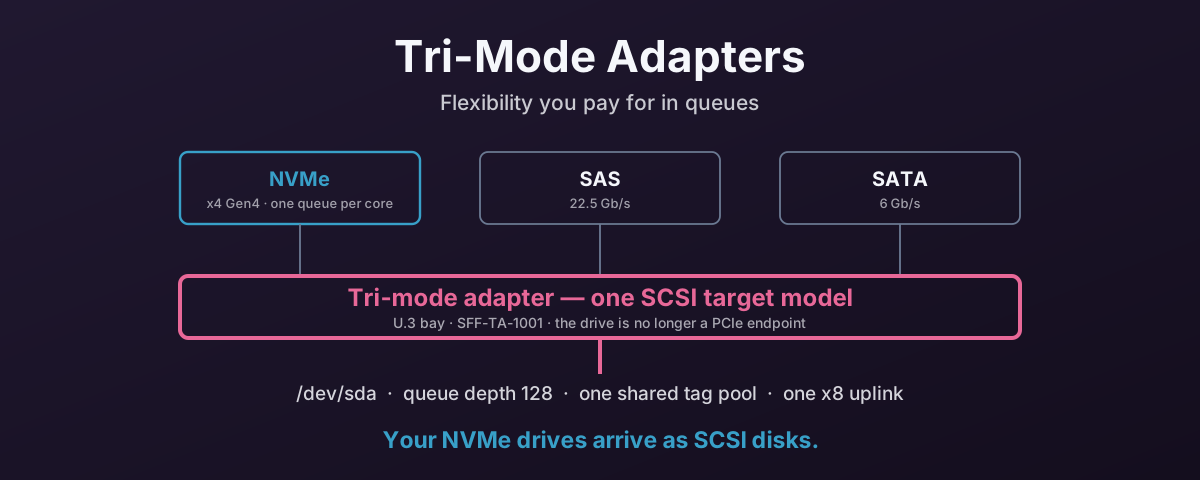
An NVMe drive entering a tri-mode adapter and leaving as a SCSI disk with a queue depth of 128

Tri-Mode Adapters Buy Flexibility With Your NVMe Queues

A tri-mode adapter lets any bay take SAS, SATA or NVMe — real flexibility, and the reason U.3 backplanes exist. What it does not advertise is that your NVMe drives stop being NVMe drives: they arrive in Linux as SCSI disks on mpt3sas, queue depth 128, sharing one tag pool and one x8 uplink. Two Gen4 drives saturate the card. A single Gen5 drive is already past it. Whether that trade still makes sense in 2026, and why the universal bays belong to the backplane rather than the controller.

13th August 2026 Â· 25 min Â· 5202 words Â· Damien Dye
Three storage tiers: Optane absorbing writes, NVMe holding Ceph metadata, and HDDs providing bulk capacity

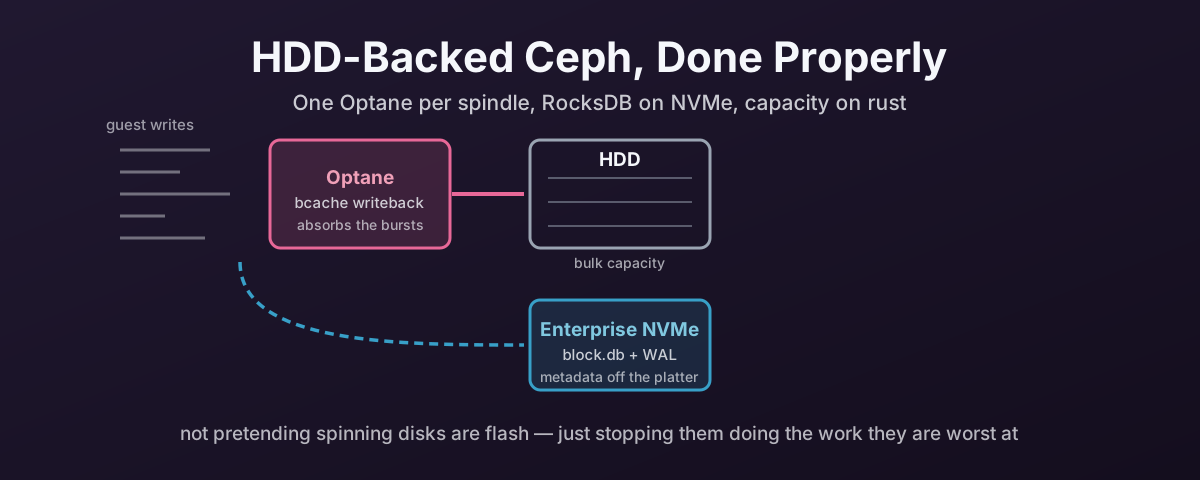
Making HDD-Backed Proxmox Ceph Clusters Fast — NVMe Metadata, One Optane Per Spindle, and What It Costs You

Flash pricing has made all-NVMe hard to justify, and enterprise HDDs are worth another look. Getting acceptable latency out of them on hyper-converged Proxmox Ceph means moving RocksDB off the spindle, pairing each disk with its own Optane through bcache — Optane specifically, because NAND endurance is wrong for that job — and being honest about the failure modes it buys you.

7th August 2026 Â· 35 min Â· 7359 words Â· Damien Dye
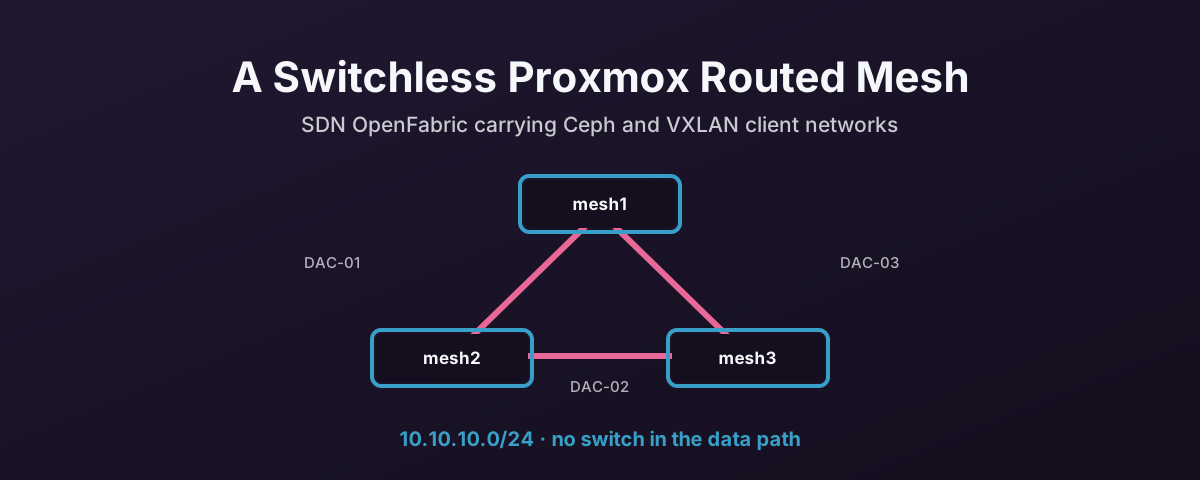
Three Proxmox nodes wired in a triangle mesh with direct cables and no switch

A Switchless Proxmox Mesh with SDN OpenFabric — Ceph and Client Networks Without a 100G Switch

Three Proxmox nodes wired directly to each other in a triangle, with OpenFabric routing over the mesh and Ceph plus VXLAN client networks riding on top. Built entirely in the web interface, and honest about where the design stops scaling.

7th August 2026 Â· 14 min Â· 2783 words Â· Damien Dye
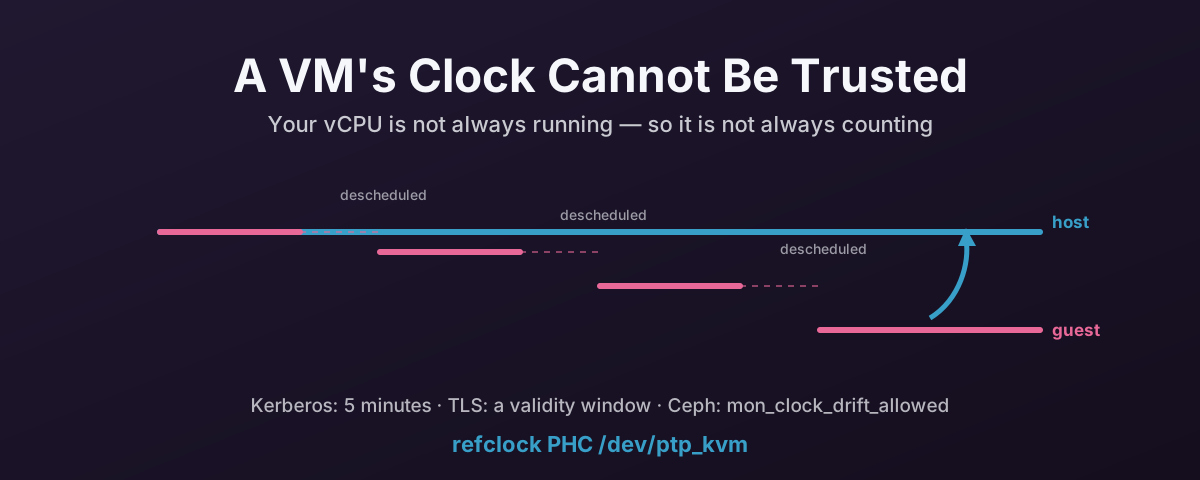
A guest clock drifting away from the host clock, and a hypercall pulling it back

A VM's Clock Cannot Be Trusted — and the ptp_kvm Fix for QEMU/KVM

A virtual machine’s clock is built on an assumption virtualisation breaks: that the CPU keeps counting. Why guest time drifts on every hypervisor, what the skew actually breaks — Kerberos, TLS, Ceph, Windows — and how ptp_kvm fixes it properly on QEMU/KVM.

7th August 2026 Â· 14 min Â· 2897 words Â· Damien Dye
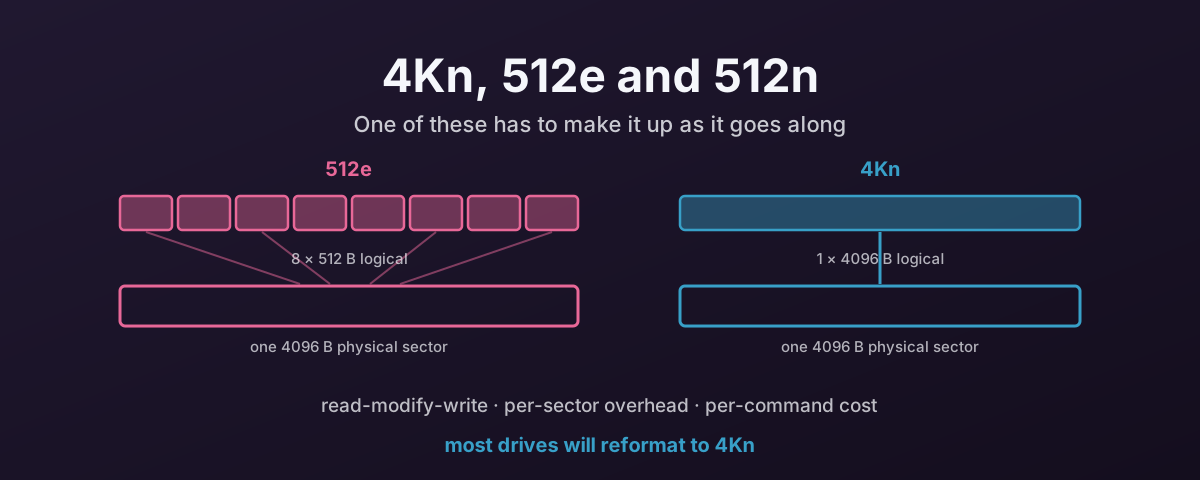
Eight 512-byte logical blocks mapped onto one 4K physical sector, beside a one-to-one 4K mapping

4Kn, 512e and 512n — Why Native 4K Wins, and What the Emulation Costs

512e drives present 512-byte sectors they do not have, and the firmware makes up the difference on every unaligned write. What that costs on the medium, in the host and in write amplification — why direct synchronous writes are the worst case — and how to convert a fleet to 4Kn.

7th August 2026 Â· 26 min Â· 5489 words Â· Damien Dye