Skip to content
AutoNavAlerts: Google's map and routing on Android Auto, with camera alerts only for cameras facing your way

AutoNavAlerts, Part One: A Sat Nav Of My Own For Android Auto

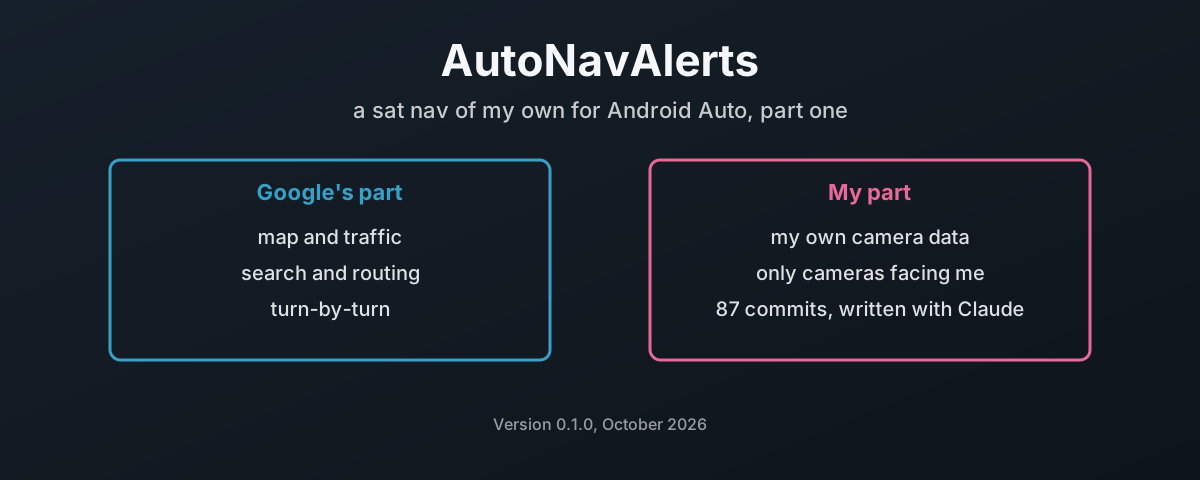
AutoNavAlerts is an Android Auto navigation app I am building on Google’s Navigation SDK: Google’s map, traffic, search and turn-by-turn, with a camera alert system on top that loads my own PocketGPSWorld subscription and only alerts for cameras facing my direction of travel. Part one covers what it does today, what Google allows a third-party app to do on the car screen and what it holds back (incident reporting, the speed limit, touch on its own controls), why every user brings their own Maps key and their own camera data, and how the code was written with Claude: a design document first, 87 commits in under two days, the hard rules that came out of the test bench, the bugs the agents wrote and how each one was caught, and the first real drive in the car.
23rd October 2026 · 16 min · 3395 words · Damien Dye
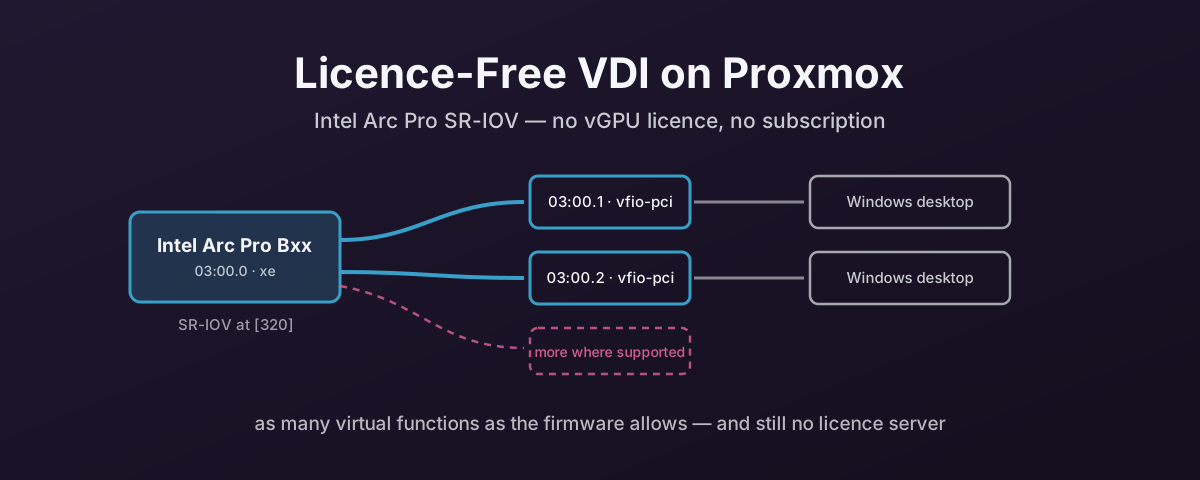
One physical GPU split into virtual functions handed to separate Windows desktops

Licence-Free Windows VDI on Proxmox with an Intel Arc Pro B50 — and the Firmware Limit That Stopped It

Intel’s Arc Pro cards do SR-IOV natively, with no vGPU licence to buy — which makes a licence-free Windows VDI on Proxmox genuinely possible. The whole build on a B50, the Windows-first bootstrap problem, why the firmware caps it at two virtual functions, and how many each card in the B-series gives you.

7th August 2026 · 16 min · 3385 words · Damien Dye
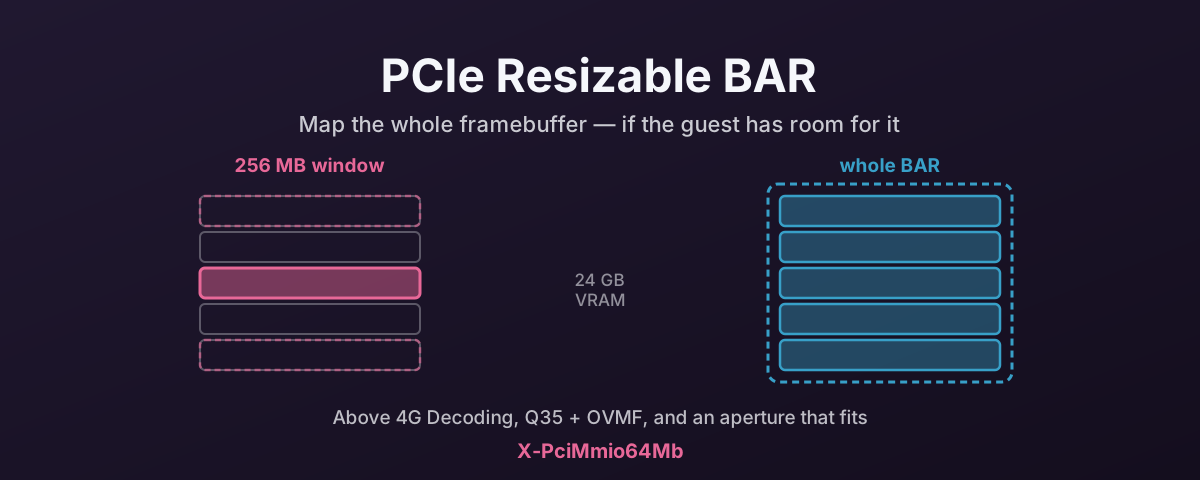
A small aperture sliding over a large framebuffer, beside the whole framebuffer mapped at once

PCIe Resizable BAR and Modern GPUs — Intel Arc, NVIDIA and AMD

Resizable BAR lets the CPU map a GPU’s whole framebuffer instead of peering at it through a 256MB window. Intel calls it required for Arc, NVIDIA enables it per game, AMD sells it as Smart Access Memory — and for AI work it changes the transfer, not the maths.

7th August 2026 · 11 min · 2295 words · Damien Dye