Proxmox VE is open-source software for running servers as virtual machines and containers on your own hardware.
These posts cover running it day to day: clusters, storage (including Ceph), virtual machines and containers, networking, and backups.
Proxmox VE is open-source software for running servers as virtual machines and containers on your own hardware.
These posts cover running it day to day: clusters, storage (including Ceph), virtual machines and containers, networking, and backups.
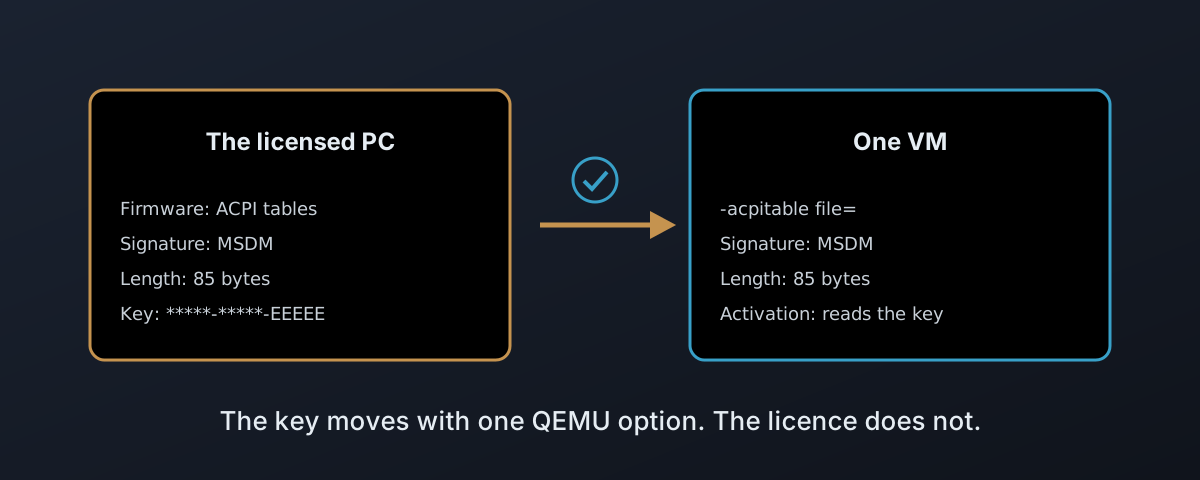
An OEM licence for the Fisher-Price OS (Windows) lives in the PC’s firmware as an ACPI table called MSDM, and QEMU will pass any such table to a guest without checking it. This covers what the table holds, a validator that refuses malformed tables before QEMU silently repairs their headers, storing them in the private half of the Proxmox cluster filesystem, Microsoft’s terms on moving an OEM licence, the one case they plainly allow, taking the table straight from the host when the licensed machine is the hypervisor, and why MAK, KMS, Active Directory and AVMA activation never touch the table.
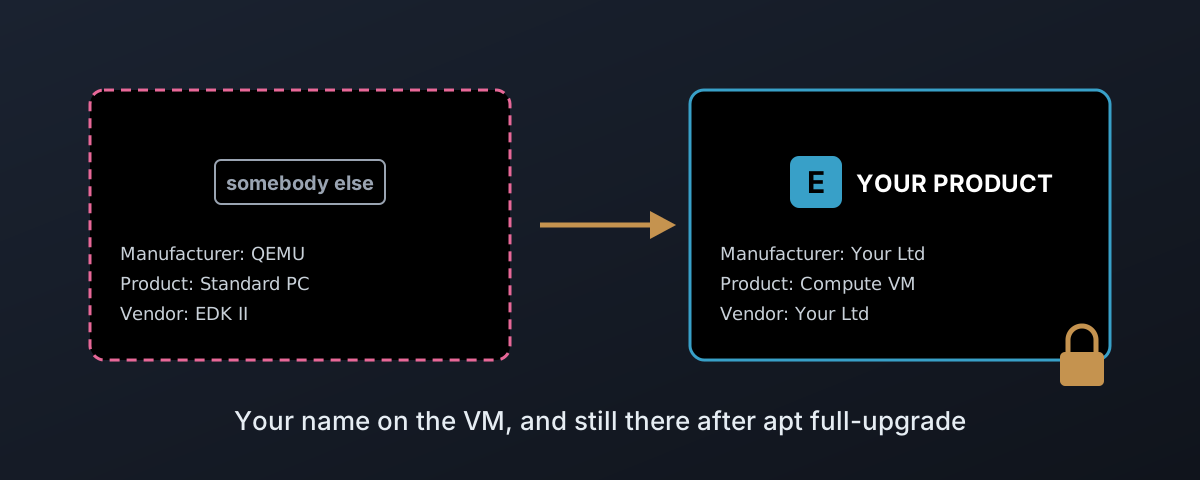
A stock Proxmox VM shows Proxmox’s logo at boot, says Proxmox in its firmware vendor string and calls itself QEMU in every SMBIOS table. This replaces all of it with your product’s name: SMBIOS types 0, 1, 2, 3 and 11 with the serial number and SKU filled from the VM’s own name and size, the SeaBIOS splash and its colour trap, a branded OVMF built from Proxmox’s own tree or an option ROM driver that replaces the logo and the BGRT under Secure Boot without touching the firmware, and the web interface logo. Every change is placed so an upgrade cannot quietly undo it, and the one an upgrade can leave dangerously stale, the firmware, gets a hook that says so.
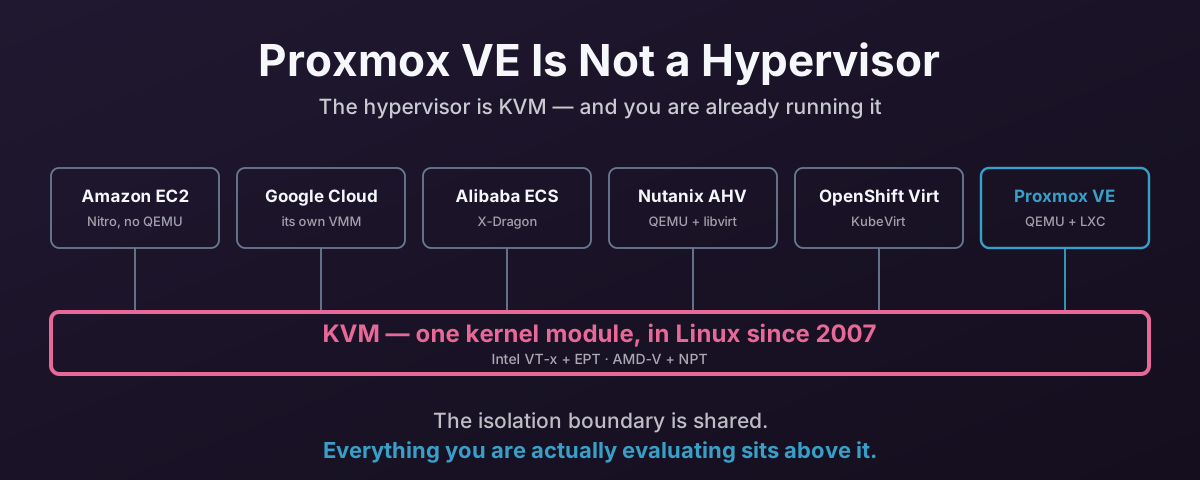
“Is Proxmox enterprise grade?” is a question about the hypervisor, and Proxmox VE does not contain one. The hypervisor is KVM — the same kernel module underneath EC2, Google Cloud, Alibaba Cloud, Nutanix AHV and OpenShift Virtualisation. What Proxmox really maintains, why the type 1 argument is aimed at the wrong line, and what the shared foundation does not buy you.
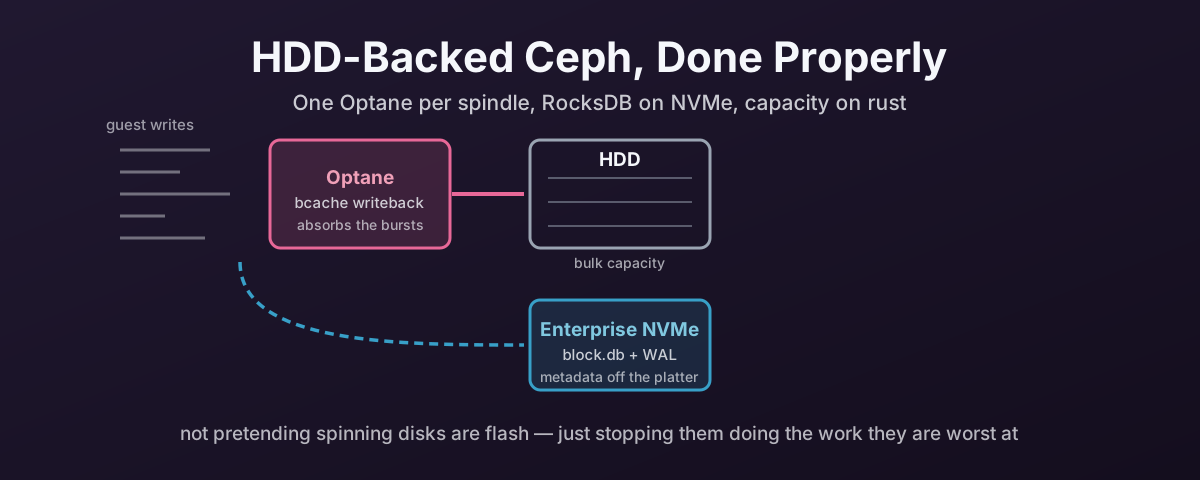
Flash pricing has made all-NVMe hard to justify, and enterprise HDDs are worth another look. Getting acceptable latency out of them on hyper-converged Proxmox Ceph means moving RocksDB off the spindle, pairing each disk with its own Optane through bcache — Optane specifically, because NAND endurance is wrong for that job — and being honest about the failure modes it buys you.
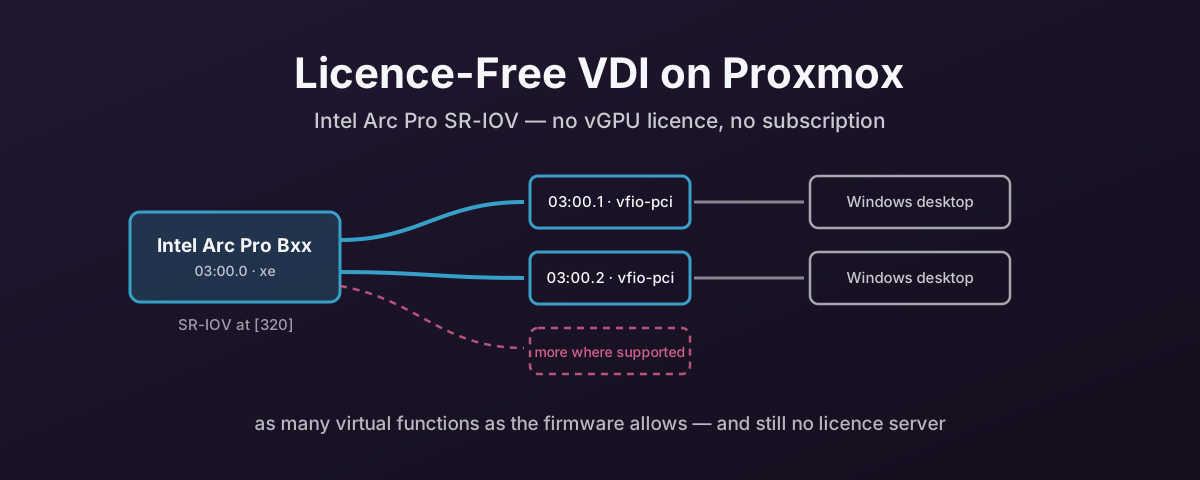
Intel’s Arc Pro cards do SR-IOV natively, with no vGPU licence to buy — which makes a licence-free Windows VDI on Proxmox genuinely possible. The whole build on a B50, the Windows-first bootstrap problem, why the firmware caps it at two virtual functions, and how many each card in the B-series gives you.
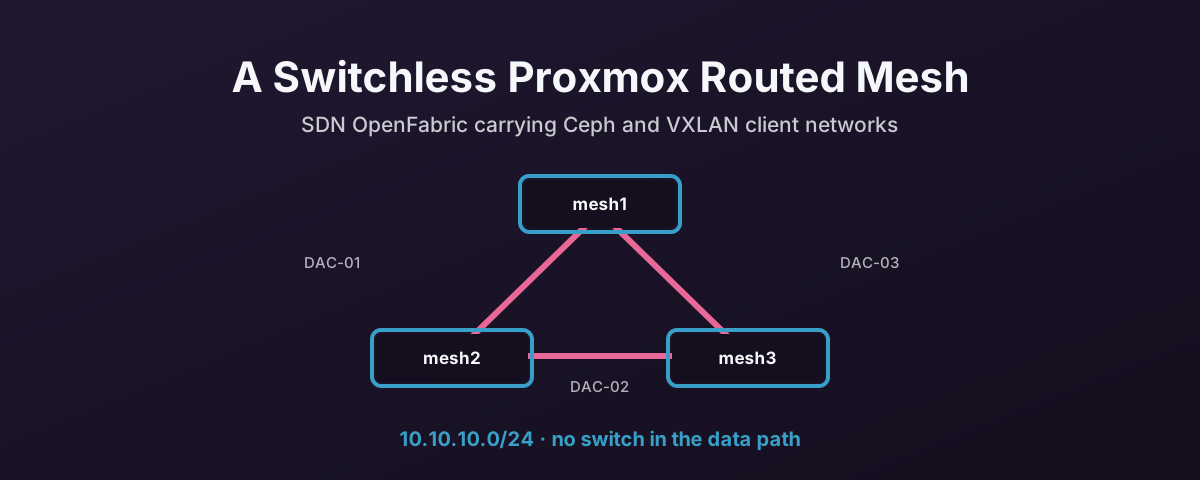
Three Proxmox nodes wired directly to each other in a triangle, with OpenFabric routing over the mesh and Ceph plus VXLAN client networks riding on top. Built entirely in the web interface, and honest about where the design stops scaling.
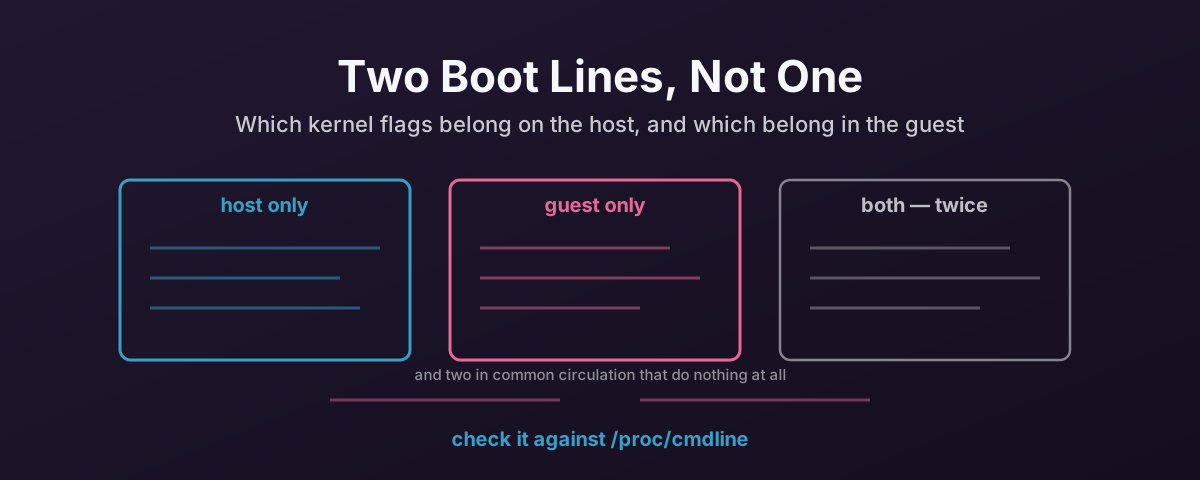
Most Proxmox tuning lines you find online are one blob of kernel flags. Half of them belong on the hypervisor, half belong inside the guest, two of the popular ones do nothing at all, and a few change meaning depending on which side of the boundary they land.
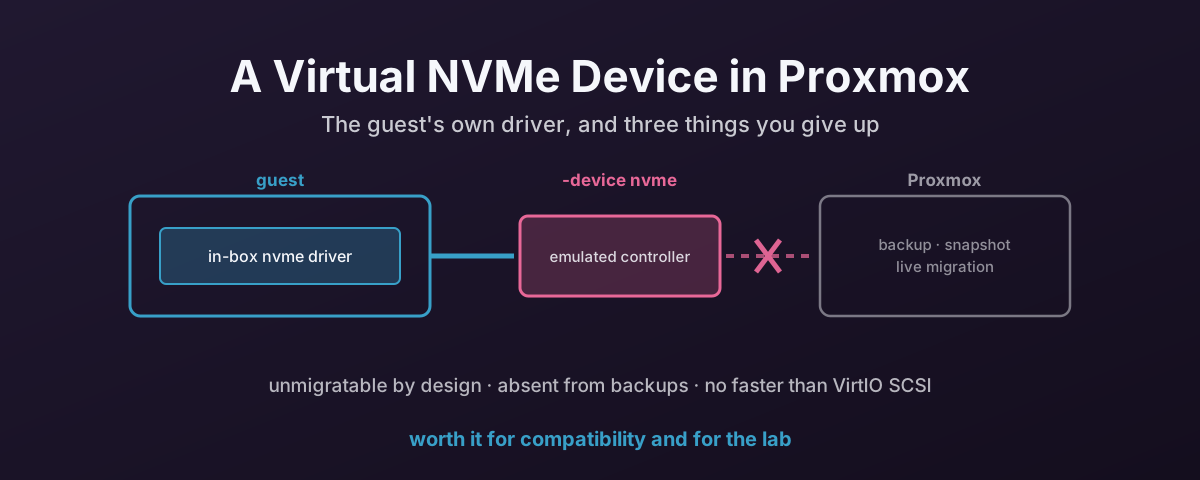
QEMU can emulate a real NVMe controller, so the guest uses its own in-box NVMe driver with no VirtIO media required. It is also unmigratable by design, invisible to Proxmox backups, and no faster than VirtIO SCSI. Here is how to add one and when it is worth it.
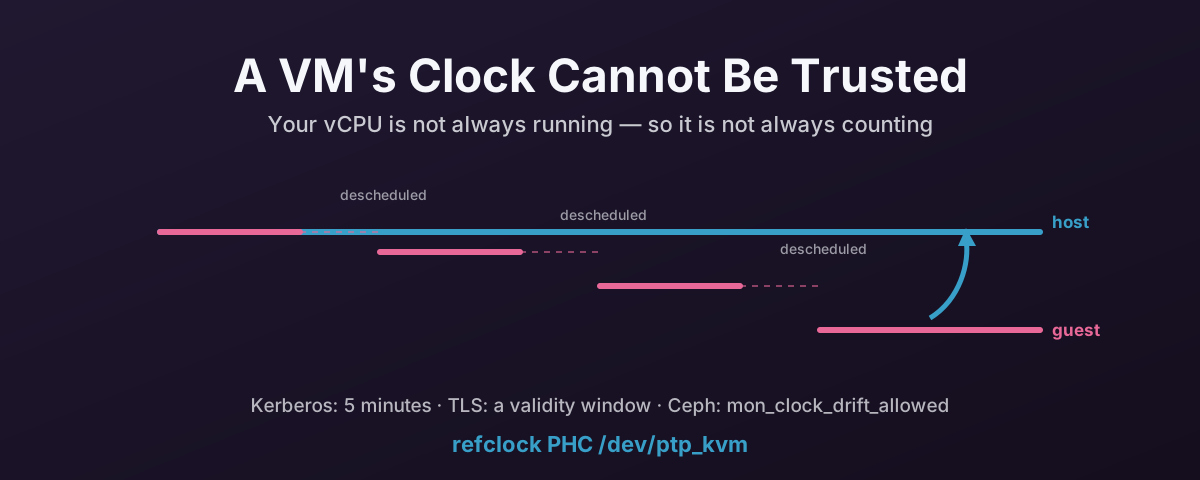
A virtual machine’s clock is built on an assumption virtualisation breaks: that the CPU keeps counting. Why guest time drifts on every hypervisor, what the skew actually breaks — Kerberos, TLS, Ceph, Windows — and how ptp_kvm fixes it properly on QEMU/KVM.
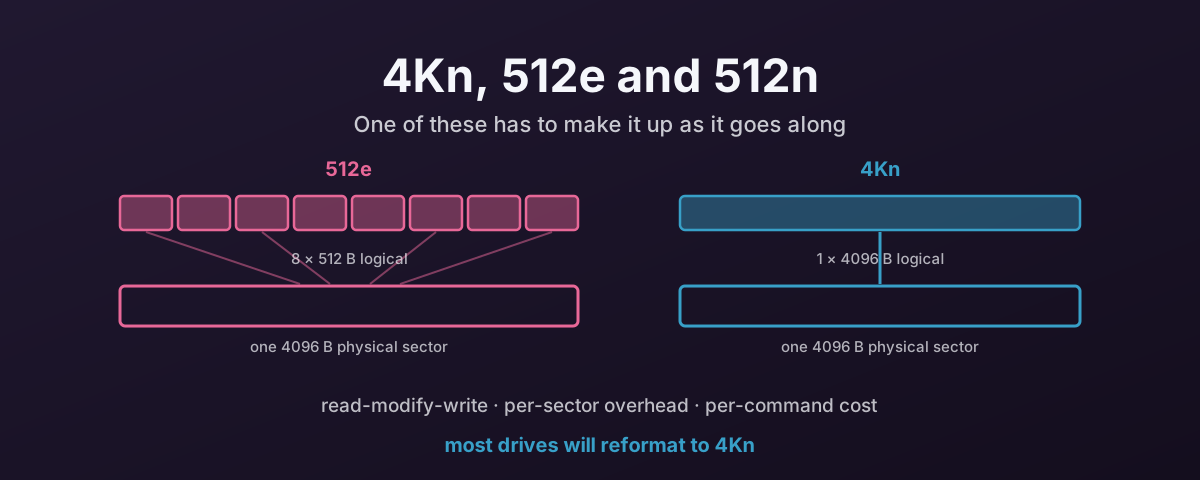
512e drives present 512-byte sectors they do not have, and the firmware makes up the difference on every unaligned write. What that costs on the medium, in the host and in write amplification — why direct synchronous writes are the worst case — and how to convert a fleet to 4Kn.